From the Fields of Europe: Basil Growers Adapt to Changing Conditions
An interview with Nati Weinblum, Genesis Seeds' European Marketing Representative
November 3, 2026
From Life on a Sailboat to Europe's Basil Fields
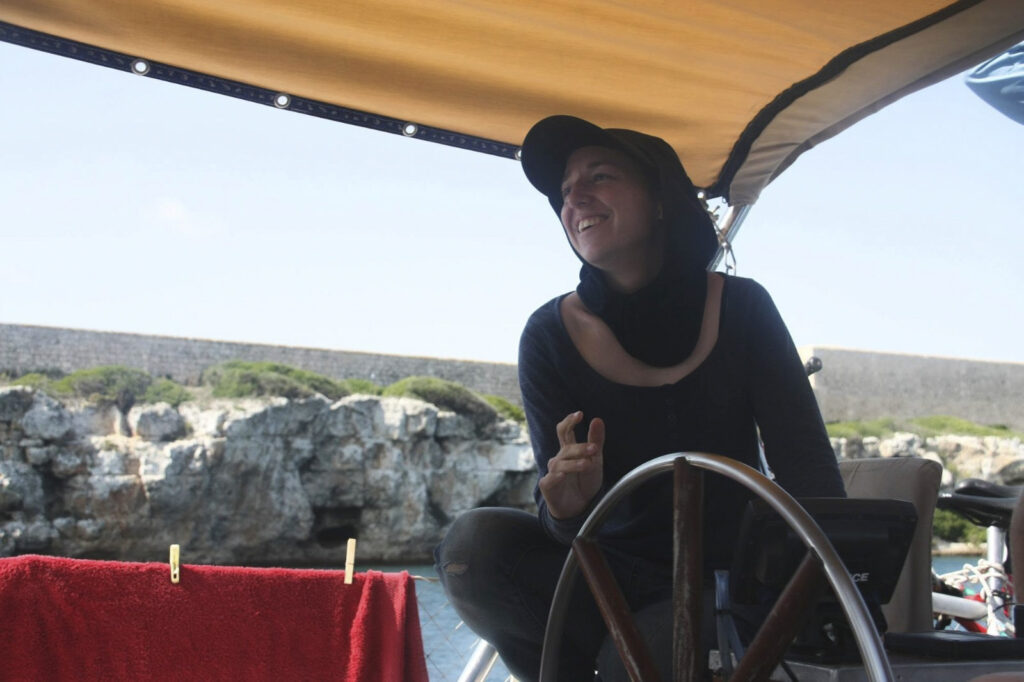
For Nati Weinblum, traveling comes naturally. Before joining Genesis Seeds, she spent three years living aboard a sailboat with her family, including a year and a half sailing through the Caribbean.
“Life on the boat taught me to live with less and adapt easily to new places,” she recalls. “Today, I have no problem packing a small bag and heading off.”
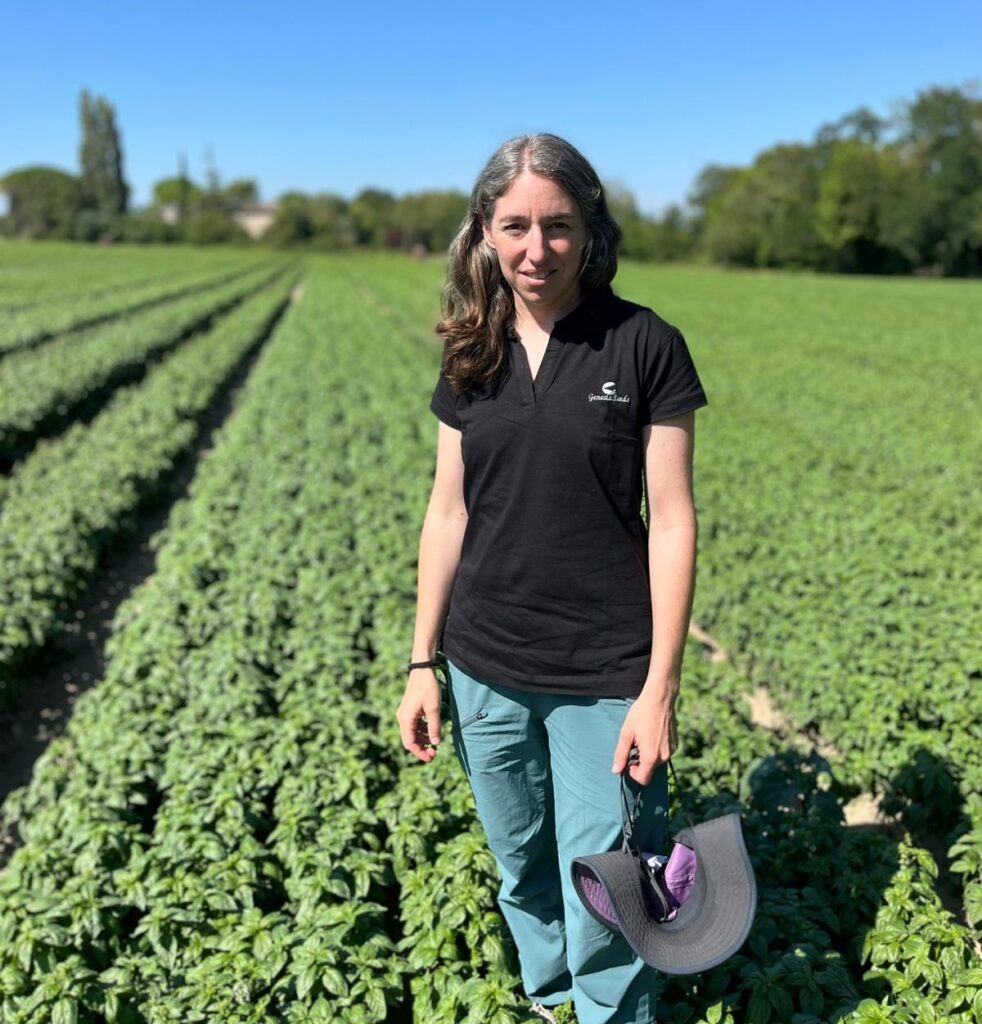
That flexibility now serves her well as she travels across Europe, meeting distributors and visiting basil growers in their fields and greenhouses.
After her first year with Genesis Seeds, Nati shares her insights into the European basil market, changing growing conditions, disease resistance, and the importance of staying connected to growers.
Nati boating in the Caribbean
Nati visiting a grower’s basil field.
Learning the Seed Business from the Field
Nati joined Genesis Seeds after working in research and development at BioBee, a biological pest control company. Although familiar with agriculture, the seed industry and business development were new to her.
“At first, I wasn’t sure how much I would enjoy marketing and business development, but after a year, I can say I really love the work,” she says. “I particularly enjoy meeting growers and seeing our varieties perform in the field. Success is rewarding, but understanding growers’ problems is just as important.”
Genesis Seeds primarily works through distribution partners, including its exclusive Italian distributor, Fenix Seeds. In markets such as the Netherlands, the company also maintains direct relationships with growers to address specific local needs.
This combination gives Nati valuable insight into different markets and production practices.
Different Markets, Different Growing Methods
One of Nati’s main observations is the diversity of basil production across Europe.
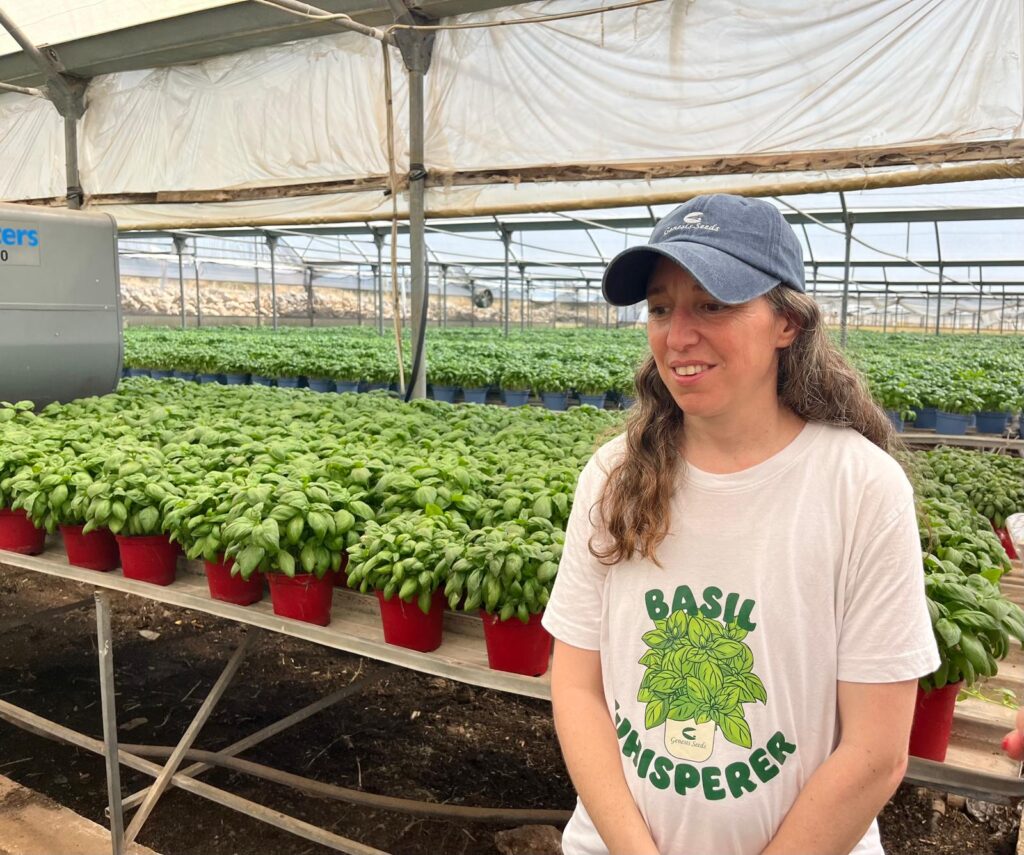
“In the Netherlands, we visit highly advanced greenhouses with modern growing systems. In Italy, much of the basil is grown in open fields, while greenhouse production generally relies on simpler technology.”
These differences shape growers’ needs and influence variety selection, making local knowledge essential.
Extreme weather during the past year exposed new vulnerabilities, particularly in Northern Europe.
“In England, Belgium, and Germany, growers who normally rely on summer rainfall suddenly needed frequent irrigation. Some systems couldn’t supply enough water, and certain fields had to be abandoned.”
Nati believes these experiences may encourage investment in irrigation infrastructure.
“Basil likes heat, so high temperatures aren’t necessarily the main problem. In Northern Europe, the real challenge was water shortages and irrigation systems that weren’t prepared for them.”
Disease Resistance: A Critical Factor for Growers
Disease resistance remains one of the most important considerations for basil growers.
Early in her work at Genesis Seeds, Nati met growers who were highly satisfied with the company’s resistant varieties. However, the emergence of a new disease strain in parts of Italy during the latest growing season demonstrated how quickly conditions can change.
“Seeing the damage caused when resistance is no longer effective made me realize that no resistance can be taken for granted or expected to last forever,” she explains.
“It’s never easy to visit damaged fields and meet frustrated growers. But facing these situations and listening to their concerns is essential to developing better varieties.”
What impressed Nati most was the confidence growers continued to place in Genesis Seeds.
“Even when growers face serious problems, they don’t give up on Genesis Seeds. They expect the company to find solutions because it has demonstrated its ability to do so in the past.”
For Genesis Seeds, these experiences reinforce the importance of continuous research and breeding to develop the next generation of resistant varieties.
Beyond Seeds: Building Long-Term Relationships
After a year of visiting growers and distributors across Europe, Nati sees her role as much more than selling seeds.
Direct contact with growers helps Genesis Seeds identify emerging needs and translate field experience into practical breeding priorities.
For Nati, the lesson is clear: success in the seed industry depends on combining reliable varieties with a deep understanding of growers’ needs and strong, long-term relationships.
Looking Ahead: What Do You Wish for Yourself in the Coming Year?
“I hope to continue learning from growers, strengthen the relationships I’ve built, and visit more fields and greenhouses. I’d like to see the insights we bring back from the field translated into solutions that make a real difference for growers.”
“On a personal level, I hope to maintain my curiosity, enjoy the journey, and keep learning something new with every visit.”